Of racism and xenophobia: signs of a multiracialised national identity

There has been a recent spate of racist and xenophobic online comments in response to a devastating flash flood disaster in Nepal as well as the news about SIA’s (Singapore Airlines) continued investments in the struggling Air India (see Matthews et al., 2026; Mohan, 2026). The decrying of these racist and xenophobic online comments by public figures and laypeople in social media and mainstream media has been strong and is a welcomed indication of the recognition of the ugliness of racism and xenophobia. The authorities’ swift action in investigating the racist and xenophobic online comments is expected and sends a clear signal that such behaviours are not tolerated. These reactions reflect a strong belief among the governing and the governed that racism and xenophobia have no place in Singapore’s multiracialism and are positive indications of the seriousness of the matter and the need to maintain racial harmony, considering the speed and resolute characteristic of many of these responses, especially from the political leaders.

The reactions from the public, largely via social media, offers an organic negative informal sanctioning which is crucial in explicitly reinforcing and/or shaping the types of social norms that are desired. While the authorities’ formal sanctions may provide a legal and punitive response that explicitly carries the Singaporean brand of multiracialism as the normative stance, it is a prescriptive state-endorsed response that may not adequately reflect public sentiments. Which is why informal sanctions arguably set a stronger tone concerning the norms that are socially desired as well as provide a sense of the public’s perspectives on racism, xenophobia, harmony, multiculturalism, and multiracialism. This does not mean that formal sanctions are not useful or needed, but that we have to understand that state narratives and approaches, while necessarily having an impact on individuals’ views and behaviours, are essentially also in interaction with individuals’ views and behaviours. Individuals respond to and interpret state narratives and responses. Likewise, the state and government may at times do the same by listening to and observing the groundswell. Social media, which was where the problem initially arose, functions as an efficient platform where public responses can drown out the offending comments.

The groundswell reflected on the social media, from my anecdotal observations (what I read and viewed) thus far, generally projects an abhorrence of the racist and xenophobic online comments. The general disgust towards certain bad actors (in this case, the online commenters, provided they are not bots) and their bad actions is understandable and for valid reasons. Interestingly, and perhaps expectedly, there are also denouncements of these bad actors as failing to embody what it means to be a Singaporean. That to be identified as a Singaporean, one must adhere and embrace multiracialism. But how are the ideas of Singaporean and multiracialism understood? This is a curious question as the racist and xenophobic online comments, specifically regarding the families of the missing Singaporeans in the Nepal disaster, were made on an assumption that the targets of the commenters’ ire are not Singaporeans (or, specifically, Singaporean Indians because they were alleged to not look or sound like Singaporeans)1.

Formal punitive responses targeting these bad actors, when conducted, will reinforce the “individual bad actors” approach and view. However, the underlying issue could perhaps be far deeply rooted. Although holding these bad actors responsible is in itself important, the social diagnosis of the problem cannot stop at naming and/or punishing racist and xenophobic individuals and behaviours. This is a corrective measure akin to a prescribed medicine to resolve an observable racist and xenophobic instance. Much less discussed and examined, especially in the public discourse (which includes layperson responses on social media), is how this problem relates to and emerges from our hyper race-conscious context. While individuals with malicious racist and xenophobic intents do exist, many of those who behave badly are often not simply individuals who willed themselves into villainous racists and xenophobes. Chances are they are products of a racist milieu or at least a racialised milieu2.

Multiracialism is typically assumed as a public good and a valuable principle in the social organisation of the Singaporean society. But it is fundamentally, at the very least, a racialised milieu which requires as its normative basis a biological/social “reality” of heightened race consciousness. The thing with criticisms of multiracialism is that it can end up over-emphasising racist intentions of multiracialism and its supporters. This is often based on it being modelled after British colonial racialised policies on social organisation which are racist in their origins and conceptions. However, there is a need to account for the historical and political developments and institutionalisation of multiracialism and how it was and is employed in the organisation of Singaporean everyday life. Furthermore, it it is important to note that, despite its flaws, Singaporean multiracialism is invested in the politics of recognition3. And for good reasons. This is why it is a challenging and difficult topic to discuss, and many proponents of Singaporean multiracialism would understandably prefer to maintain the status quo and not tinker with a system that to them is, overall, functioning well. But my view is that the flaws of Singapore’s multiracialism should not be ignored. We need to re-examine Singaporean multiracialism and its problem of reproducing race as well as the systemic racialisation that it entails. It has to be juxtaposed with a suitable form of multiculturalism. Along this vein, we have to work out what is actually means to be a multiracial society and the implications of our definition of it. Considering the systemic racialisation of the Singaporean society and the relatively rigid model of our understanding and interpretation of multiracialism and what is a multiracial Singapore, a narrowly framed multiracialised national identity is arguably taking root (Loh, 2025). The recent racist and xenophobic online comments may be an indication, out of a series of similar past incidents, of such a multiracialised national identity, and it could be a call for concern. While we continue to sanction individual bad actors4, we have to also look into the racialised milieu that provides the conducive context for racism and xenophobia to take root, likely masked under a notion of a multiracialised perspective, contributing to a multiracialised habitus.

References

ChannelNewsAsia. (2026, September 09). 5 people identified and interviewed over comments on Nepal floods, SIA’s Air India investment: Police. ChannelNewsAsia. https://www.channelnewsasia.com/singapore/5-people-nepal-floods-sia-air-india-online-comments-6371351

Loh, S. H. (2025). A multiracialised national identity: Singaporean multiracialism and national identity. Journal of Intercultural Studies, 46(4), 662-680. https://doi.org/10.1080/07256868.2025.2519251

Maintenance of Racial Harmony Act 2025 (No. 10 of 2025) (Singapore). https://sso.agc.gov.sg/Act/MRHA2025/Uncommenced/20260624040946?DocDate=20250305

Mathews, M., Teo, K. K., & Tay, M. (2026, September 08). ‘Shameful’ racist comments after Nepal disaster should never become normal in Singapore. ChannelNewsAsia. https://www.channelnewsasia.com/commentary/racist-comments-nepal-disaster-singapore-6367311

Mohan, M. (2026, September 05). Police looking into ‘shameful’ racist online comments about Nepal-Tibet disaster, Air India: SM Shanmugam. ChannelNewsAsia. https://www.channelnewsasia.com/singapore/racist-comments-nepal-air-india-shanmugam-police-6364346

  1. Then again, does it really matter if the victims of a disaster or tragic event need to be co-nationals in order for one to offer help or to feel sympathy? ↩︎
  2. This, however, should not be used to absolve one’s racist and xenophobic actions and behaviours. ↩︎
  3. The politics of recognition is not unproblematic in itself. ↩︎
  4. The Maintenance of Racial Harmony Act has just come into force on 15 September 2026 (see Maintenance of Racial Harmony Act, 2025), drawing reference from the existing Maintenance of Religious Harmony Act that was introduced in 1990. This new Act would give authorities greater powers and options to swiftly address offences that are deemed or believed to prejudice racial harmony, through imposing pre-emptive restraining orders and/or offering offenders Community Remedial Initiative opportunities for non-egregious offences. ↩︎
Whither (the idea of) racial harmony?

This year, on 21st July 2026, Singapore commemorates her 30th Racial Harmony Day, a key annual event that began in 1997 as part of the implementation of the National Education (NE) programme. After thirty years, it makes one wonder how do we make sense of the idea of racial harmony, moving forward, in the context of the contemporary multicultural society? It is, of course, deeply tied to the concepts of “race” and social harmony with an emphasis on interracial and interreligious harmony1. Its symbolic visibility is very much embedded in school routines, mostly as an explicit annual commemorative event, but also a constant, generally implicit, context that shapes how we see and understand multiculturalism, both domestically and globally. As the world seemingly becomes embroiled in ideological polarisation, waging culture wars and witnessing the rise of nativist politics, Singapore appears like an island of calm in a sea of storm – a multicultural safe haven with relative social harmony. The well-used realist, but nonetheless convincing, political mantra is that such a social harmony is “unnatural” and thus fragile, requiring constant conscious intervention. It is an effective national vulnerability narrative that arguably strongly shapes how we talk about race, as distinctive “racial” groups that do not naturally cohere well with one another, instilling in us a habit of conflict avoidance to keep the fragile interracial peace which contributes to a state of disempowered dialogue (Loh, 2026b). This is not to be dismissive, claiming that Singapore’s policies and regulation of multiculturalism to maintain racial harmony is not constructed on good intentions. I would say they are made with good intentions, cognisant of the sanctity of social harmony. However, such a managerialist approach to multiculturalism (Velayutham, 2007), might end up “coddling” the public, and could even unintentionally perpetuate race essentialism (Loh, 2026b). Within the framework of Singaporean multiculturalism, this can still function in keeping racial harmony, at least at a surface level. But if Singaporeans increasingly, as a habit and out of a fear of confrontation, defer to the state authorities every time a multicultural issue arises, we may gradually risk losing our capacity to reason and negotiate as fellow human beings in a multicultural society. This tendency to defer to state authorities unfortunately may not be just a Singaporean stereotype, as a qualitative study in which I examined young people’s perspectives on multiculturalism in Singapore has found (Loh, 2026a). Notably, the use of the term multiculturalism in Singapore is frequently conflated with multiracialism2, with a dominant ethnoracialised lens perpetuated by the prominent CMIO (Chinese, Malay, Indian, “Others”) multiracial model that is visibly reflected across mundane administration, social and political organising, as well as policymaking. Hence, taking Singaporean multiculturalism at face value has also arguably contributed to an ironically narrow multiracialised national identity, sharpening our views through race essentialist lens, contrary to the inclusive ethos of multiculturalism (Loh, 2025).

While social harmony is “a public good that few can deny” (Chua, 2003, p. 74), our approach to harmony need not be about treating all sorts of conflict as undesirable. Neither should we see conflict and harmony as mutually exclusive conditions. Nor am I suggesting that we can simply transit unproblematically into a utopian post-multicultural era3, with an assumption that we are all blind to race, colour, and phenotype. The fundamental problem is that we cannot just ignore and not talk about race, thinking that our social construction of it will magically disappear (Lentin, 2020). When Singapore declares itself a multiracial society and seeks to implement fairness through a policy approach of multiracialism, there is an extent of acknowledgement of a need to provide political recognition to the different racialised groups4, instead of assuming that sheer political will can overcome the colonial legacy of race. The introduction of Racial Harmony Day built on this understanding. These are worthy pursuits. But the underlying issue is that these racialised groups—specifically the CMI racialised groups—remain categorised in relatively rigid administrative terms, despite efforts to make it more flexible5. They are “racial” groups. As such, it would seem that the spectre of colonial race remains. And as long as we take on a realist view of race—seeing race as a biological and/or social “reality”—our understanding of racial harmony rests on the reproduction of race essentialism.

A possible move forward is to take on an anti-realist approach to race6 by understanding that “races are not real, [and] what is thus occurring in the everyday is the ongoing misidentification of people, specifically the process of racialisation, racialising people based on mistaken racialised differences” (Loh, 2026b, p. 483). This can place the idea of racial harmony in a new light, enabling us to interrogate our reproduction of racialised groups, and work on understanding that our approach to “race” is processual, that we are actively reconstructing and reproducing race (doing race). That racialised categories are loose categories, susceptible to changes, interpretations, and, at times, situational. That racialised categories are mere identity placeholders while we work on (re)discovering and/or (re)constructing our cultural identities, to transit from and de-emphasise race as an important identity. That racialised categories are not distinct culturally intra-homogenous ethnoracialised entities, but fluid racialised identities that can and do interweave often, both arbitrarily and meaningfully, especially after periods of co-existence. Such a perspective would frame racial harmony not as an unnatural and fragile goal perched on sensitive racial identities that require great interventions to tame their “natural” and “tribalistic” inclinations, but more as an ongoing reflexive and reflective endeavour towards social harmony.

References

Chua, B.-H. (2003). Multiculturalism in Singapore: an instrument of social control. Race & Class, 44(3), 58-77. https://doi.org/10.1177/0306396803044003025

Hochman, A. (2017). Replacing race: interactive constructionism about racialized group. Ergo, 4(3), 61-92. https://doi.org/10.3998/ergo.12405314.0004.003

Lentin, A. (2020). Why race still matters. Polity Press.

Loh, P. Y., & Han, J. (2014, September 29). Racial harmony day. National Library Board. https://www.nlb.gov.sg/main/article-detail?cmsuuid=d584f038-2d67-4a3b-b786-7d2116dbec3b

Loh, S. H. (2022). The continued relevance of multiculturalism: dissecting interculturalism and transculturalism. Ethnic and Racial Studies, 45(3), 385-406. https://doi.org/10.1080/01419870.2021.1963459

Loh, S. H. (2025). A multiracialised national identity: Singaporean multiracialism and national identity. Journal of Intercultural Studies, 46(4), 662-680. https://doi.org/10.1080/07256868.2025.2519251

Loh, S. H. (2026a). Disciplining the morally autonomous individual: young people’s perspectives on Singaporean multiculturalism. Asia Pacific Education Review. Advance online publication. https://rdcu.be/fqoYO

Loh, S. H. (2026b). Systemic racialisation: Singaporean multiculturalism and its discontents. Ethnicities, 26(3), 481-502. https://doi.org/10.1177/14687968251330118

Rocha, Z. L. (2011). Multiplicity within singularity: racial categorization and recognizing “mixed race” in Singapore. Journal of Current Southeast Asian Affairs, 30(3), 95-131. https://doi.org/10.1177/186810341103000304

Velayutham, S. (2007). Responding to globalization: nation, culture and identity in Singapore. ISEAS Publishing.

  1. For a concise summary of Racial Harmony Day and its rationale, see Loh & Han (2014). ↩︎
  2. See Loh (2026a, 2026b) for discussions on the problem of this conflation. ↩︎
  3. See Loh (2022) for a critique of post-multiculturalism. ↩︎
  4. There is of course the issue with the ironically homogenising effect of the over-simplified racialised categories. This is discussed in greater detail in Loh (2025, 2026b). ↩︎
  5. For example, the introduction of double-barrelled racial identificiation (Rocha, 2011) and the apparent distinction of race from ethnicity reflected in the upper secondary school level Social Studies textbook, starting from 2016, wherein ethnic groups are seen as sub-sets of the CMIO racialised categories. ↩︎
  6. I draw on Hochman’s (2017) work on anti-realism in the construction of racialised groups. ↩︎

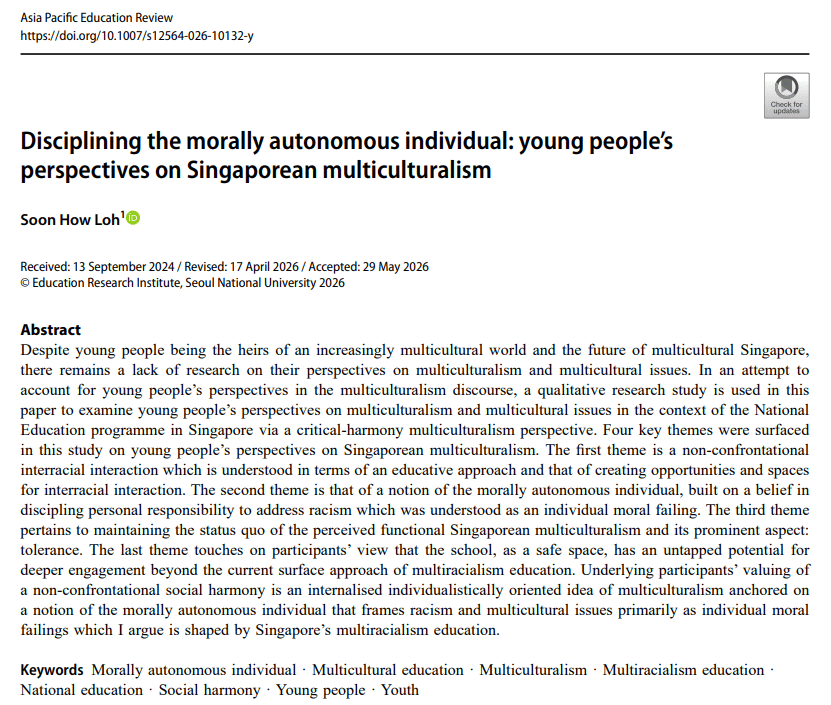
New article: “Disciplining the morally autonomous individual: young people’s perspectives on Singaporean multiculturalism”

This article draws from my master’s thesis research which examines a topic that is deeply important to me – multiculturalism. It is, of course, not an idiosyncratic interest or a niche topic but a prevailing concept that has penetrated mainstream discourse. Nevertheless, it has remained complex and contested (see, for example, my attempt on clarifying the term) and often discussed from a macro perspective without considering young people’s perspectives on multiculturalism. In an arguably highly race-conscious society like Singapore, I find this all the more concerning, especially considering the significance both the government and the public have accorded multiculturalism. There is definitely much to discuss about multiculturalism, to probe at our assumptions about it, constantly revisit what it means in the contemporary multicultural milieu, think about its possibilities and how they can be translated meaningfully, look at how we approach and think about it whether individually or collectively. This is not an exhaustive list. Multiculturalism entails a certain openness, an embrace of the fluidity and dynamism of it, rather than to be constrained by a definitive multiracialism of narrow racialised categories. As I have discussed elsewhere, a restricted ethnoracialised framing of multiculturalism can introduce and condition a multiracialised understanding of national identity, detracting from the principles of multiculturalism as inclusive and fluid. What this article of mine surfaces is that a notion of the morally autonomous individual is deemed desirable and achievable by the participants in my study which reduces racism to an individual moral failing, overlooking structural issues and challenges.

My current paper, published at the Asia Pacific Education Review, examining young Singaporeans’ perspectives on multiculturalism in the context of Singapore is a small contribution to an endeavour in nudging our dialogue on multiculturalism, as part of our efforts to break the spectre of racial conflict and social instability that entrenches a habit of conflict avoidance and disempowered dialogue (this is something I discuss about in another article). An underlying message in my article here is not to discard social harmony, which is a socially desirable public good (and for good reasons), but to see it as compatible with criticality. Participations in my study are cognisant of the importance of social harmony, though seemingly uncritical about Singaporean multiculturalism. However, it is not an indictment of young people’s lack of capacity to critically approach multiculturalism nor is it a simple and straightforward criticism of the education system and programme (despite my critique of Singapore’s multicultural education as “multiracialism education”). Young people can think (here I am invoking Kishore Mahbubani’s question “Can Asians Think?”) but they need to be provided the space, time, and encouragement to do so. Only then can we depart from taking an approach of disciplining the morally autonomous individual in multiculturalism.

The full article can be accessed via the following link: https://rdcu.be/fqoYO

Reference

Loh, S. H. (2026). Disciplining the morally autonomous individual: young people’s perspectives on Singaporean multiculturalism. Asia Pacific Education Review. Advance online publication. https://doi.org/10.1007/s12564-026-10132-y

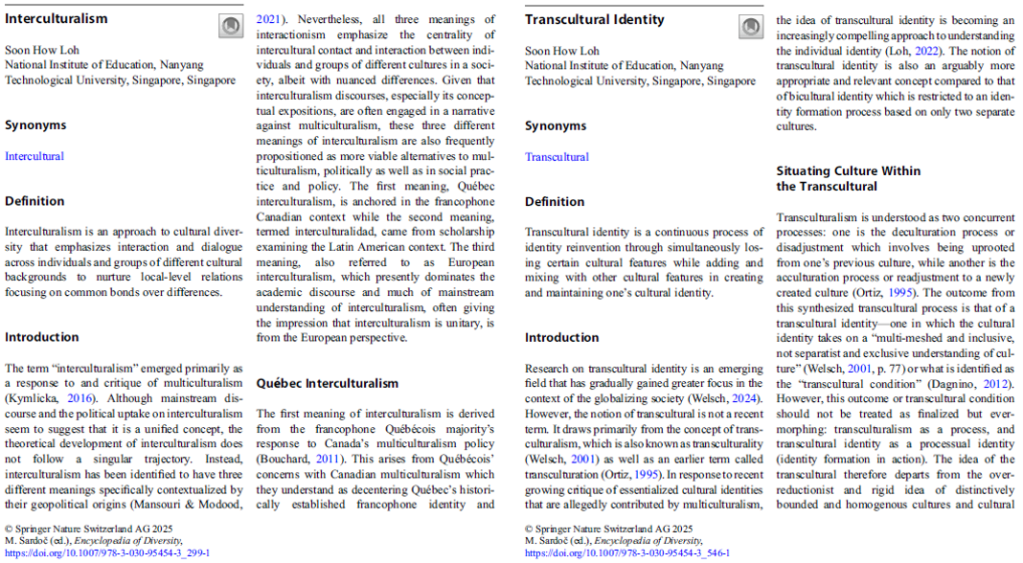
New encyclopedia entries: “Interculturalism” and “Transcultural identity”

Recently published encyclopedia entries, in the Encyclopedia of Diversity, on two of the topics that I am interested in: interculturalism and transcultural identity. Thank you Mitja Sardoč for the kind invitation to contribute.

References

Loh, S. H. (2025). Interculturalism. In M. Sardoč (Ed.), Encyclopedia of Diversity (pp. 1-8). Springer. https://doi.org/10.1007/978-3-030-95454-3_299-1

Loh, S. H. (2025). Transcultural identity. In M. Sardoč (Ed.), Encyclopedia of Diversity (pp. 1-3). Springer. https://doi.org/10.1007/978-3-030-95454-3_546-1

New article: “A multiracialised national identity: Singaporean multiracialism and national identity”

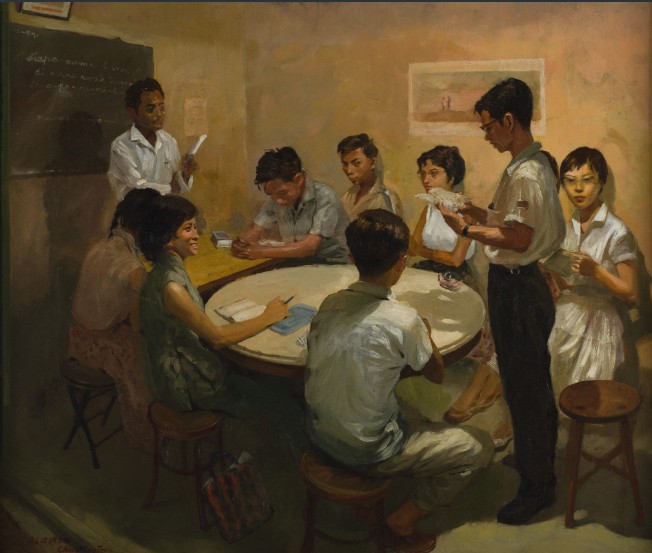
image source: Chua, M. T. (1959). National language class. National Gallery, Singapore. https://www.nationalgallery.sg/sg/en/our-collections/search-collection.artwork.html/national-collection/chua-mia-tee/p/P-0145.jpg.html

Singapore’s national identity has been a topic that many Singaporeans (or at least me) have mulled over for a long time. On the surface, it may seem intuitive and obvious but becomes persistently elusive when one tries to explain what exactly it means to be a Singaporean. With the approaching 60th anniversary of Singapore’s independence, a conversation about the Singapore national identity is gradually becoming more urgent as its continued elusiveness can only feed into our existential anxieties. Engaging the national identity building project in Singapore in my new article published in the Journal of Intercultural Studies, I identify a deep-seated problem that requires attention – specifically that of an emerging ethnoracialised national frame in defining national identity in Singapore; what I have called a multiracialised national identity. This is especially concerning considering the seemingly successful model of multiracialism in Singapore that has long espoused a civic approach in the conceptualisation of national identity. My paper looks into the government-led narrative of national identity and its many challenges in an attempt to unpack the national identity project in the context of Singaporean multiracialism, probing into Singapore’s national identity problematic.

Reference

Loh, S. H. (2025). A multiracialised national identity: Singaporean multiracialism and national identity. Journal of Intercultural Studies. Advance online publication. https://doi.org/10.1080/07256868.2025.2519251

New article: “Systemic racialisation: Singaporean multiculturalism and its discontents”

It is not uncommon for conversations about race to assume a racist framing. This link in itself is not wrong. Racial ideology is persistent and work on racism has matured beyond attitudinal studies, developing into systemic racism to better understand and explain racism and its racial ideology. However, the racialisation of people into “races” seems to remain solely within a racist perspective. That racialisation is simply the process of racialising people, allocating them into a racial hierarchy. This tends to conflate the problem of misidentification of people into descriptive racialised groups in the process of racialisation with the problem of racism as an ideology of racist organisation of society in terms of a social hierarchy. In my paper, I seek to disentangle racialisation from a racist frame, not to suggest that the two concepts of racialisation and racism are completely unrelated and separate but to provide a more nuanced understanding of racialisation so to enrich discourses on race, racialisation, and racism as well as to illustrate their interaction and connection. Singapore as a postcolonial society that embraced multiculturalism since independence provides a useful case for this analysis.

Reference

Loh, S. H. (2025). Systemic racialisation: Singaporean multiculturalism and its discontents. Ethnicities. Advance online publication. https://doi.org/10.1177/14687968251330118

A random musing at a hawker centre

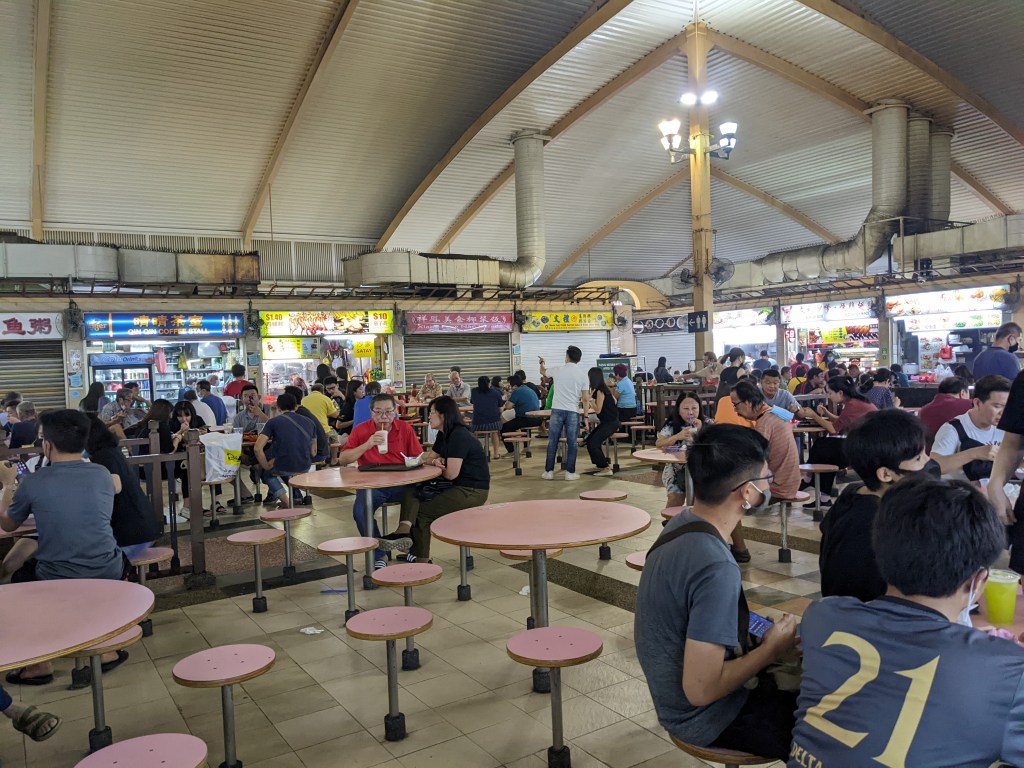
Sitting down on a plastic-cased stool bolted to the tiled floor of a hawker centre evoked a certain feeling of comfort and familiarity despite the seemingly colourful cacophony of sounds and chatter. The interweaving layers of strong aromas sporadically punctuated by whiffs of frying oil accentuated the disorderly element of the hawker centre as one’s senses are consistently assaulted. Yet, such a scene elicited the “heartlander” in me, calling forth positive memories of communal dining in which people have their meals in close spatial proximity but as separate social units. It is the seeming unorchestrated mix of these otherwise isolated social dining units and diverse culinary stalls that contributes to the apparent “disordered” whole which makes up the hawker centre scene.

Characterising the hawker centre scene as discombobulating to one’s senses, while a fair experience for persons who are foreign to it, is perhaps missing the intricacies of the hawker centre scene. Underlying all these clashes of the senses on the surface, the hawker centre in fact functions on a set of structured logics. A lot of these logics are in fact cultural and social logics, whether formally implemented, like that of the chairs-around-the-table format for social diners, or informally understood by regular hawker diners in Singapore, like the use of objects (typically a pack of facial tissue papers) to chope (the Singaporean lingo for “reserve”) a table. Most of the sociocultural logics can also be understood as a form of etiquette – the hawker diner etiquette.

The hawker diner etiquette is not a clear-cut set of rules that one can easily refer to understand how to behave when dining at a hawker centre. These rules can change depending on the hawker centre and/or hawker albeit retaining some semblance of a set of common “rules” or social norms. Striping away the most immediate and obvious manifest function of the hawker centre as an dining place to fulfil the biological needs of individuals would also reveal various other functions that are characteristically latent but nonetheless critical contributors to the shaping of the social and cultural norms in the Singaporean society.

One of these latent functions is the hawker centre’s informal role as a common space for people of different cultural and socioeconomic backgrounds. While the more affluent may have a higher tendency to avoid hawker centres, the fact that hawker centres remain relatively accessible, financially and physically, position them as sites with high potential for intercultural interaction. Nevertheless, while I sat at my seat casually nibbling my dinner and people-watching, I could not help but noticed that this opportunity for intercultural interaction remains as that – an opportunity. Nothing more, nothing less. The hawker centre setting is a potentially fertile ground for intercultural interaction to occur and thrive but intercultural interaction mostly occur in mundane terms while its potential to thrive remains a potential. It is not that the mundane intercultural interaction is unimportant. In fact, such everyday intercultural interactions are critical sustenance for the Singaporean multicultural reality. What stood out to me is perhaps our seeming apathy in taking up the opportunity to deepen our intercultural interaction. The general lack of or insufficient multicultural curiosity beyond the mundane. Perhaps it’s a cultural diffidence or a fear of being intrusive. Perhaps we have grown so used to the (perceived) adequacy of the mundane that additional efforts at intercultural interaction is deemed unnecessary. Or perhaps it’s a mixed bag or all of these and more. And there is always the possibility that the hawker centre functions optimally as a site for mundane intercultural interaction and that anything beyond would be straining the limits of its supposed latent functionality.

The continued relevance of multiculturalism

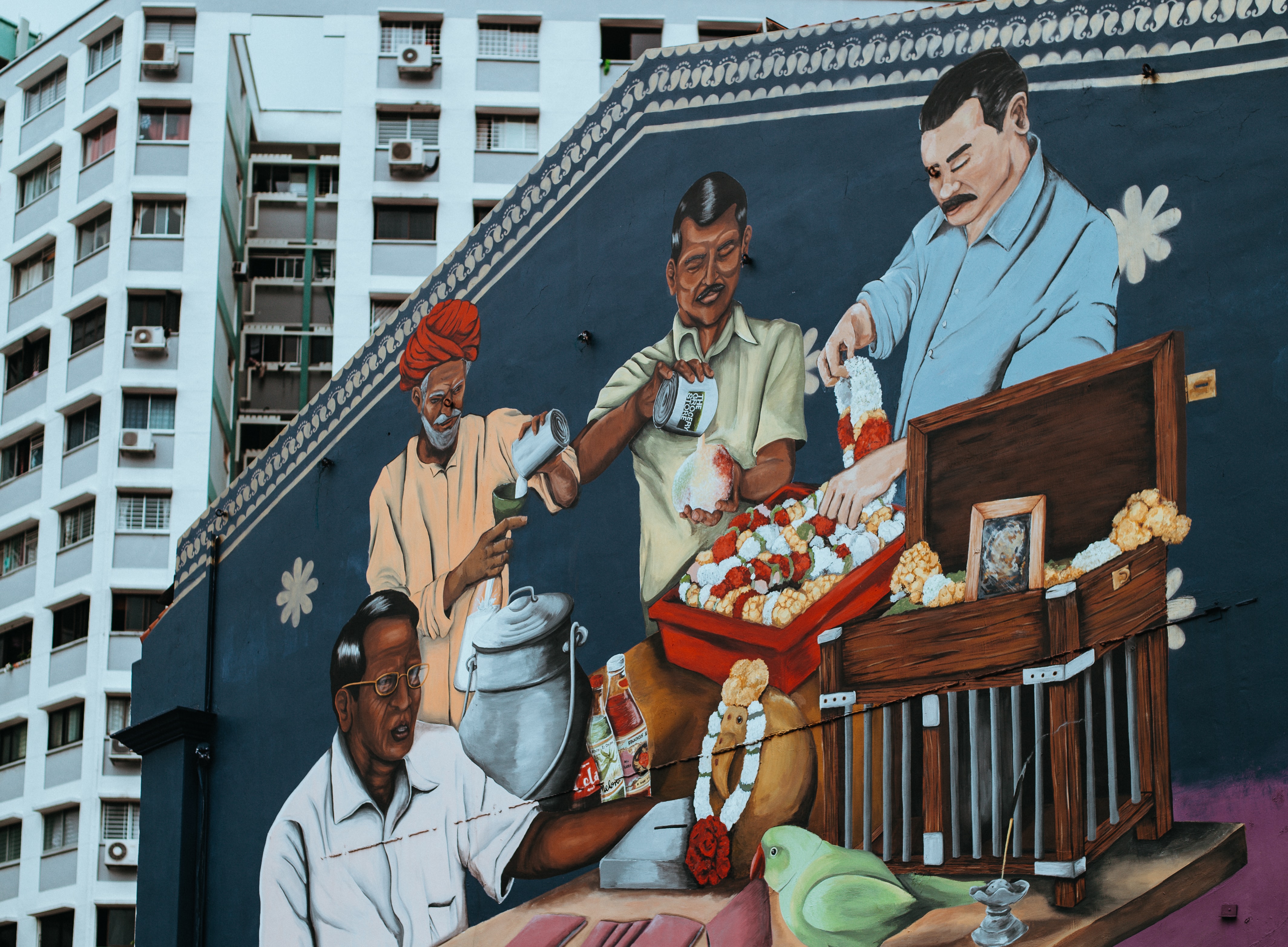
image source: Spratt, A. (2017). Mural of men in Singapore. Unsplash. https://unsplash.com/photos/EoscGO-ACbQ

My first single-author article in Ethnic and Racial Studies is recently published online. My motivation in writing it arises from a need to address why multiculturalism continues to be perceived by some as detrimental to society and the examine the main challenges to its viability in the contemporary society that is experiencing increasing diversification. Two key and related critiques of multiculturalism are cultural essentialism and imposed cultural homogeneity. These have contributed to an idea of a transition away from multiculturalism into a post-multicultural era. In an endeavour to get rid of the conceptual and political baggage of multiculturalism, two alternative approaches to cultural diversity have emerged. These two alternative approaches, interculturalism and transculturalism, have gradually gained prominence and are offered as viable concepts in solving the problems that multiculturalism is alleged to have caused.

In this paper, I seek to provide a conceptual clarification of multiculturalism, rooted in the notion of family resemblance. While the key tenets of interculturalism and transculturalism were critically examined, the thrust of my argument in the paper is not to reject these two alternative concepts. New grand theories and ideas are often constructed in contrast to existing ones. However, in writing this paper, my stance is that in many cases, emerging ideas, while highly critical of existing concepts, can actually serve as catalysts for reforming old ideas either through synthesis or restructuration of their fundamental foci. This competition of ideas can be viewed as transformative potentials and conceptual developments. Although it may not apply to all cases, taking this perspective as an initial default approach in addressing ideas competition could prove beneficial in advancing the field.

My conceptual understanding of multiculturalism points to its potential as a flexible and inclusive approach towards cultural diversity that enables it to continuously engage its detractors and critics. Both interculturalism and transculturalism can help to enrich the multiculturalism discourse and, to borrow from Tariq Modood, serve as multiculturalism’s critical friends.

Reference

Loh, S. H. (2021). The continued relevance of multiculturalism: dissecting interculturalism and transculturalism. Ethnic and Racial Studies. Advance online publication. ​https://doi.org/10.1080/01419870.2021.1963459

Dying, funerals, and social expectations: a brief observation

The passing of a family member is often not an easy life event. The emotional bond nurtured over the years as well as shared memories can easily overwhelm whatever rational reasoning and pragmatic preparation one put in place. I, for one, had a seemingly long runway in preparing for the mortal eventuality of my dad when he was given his initial diagnosis. At the same time, the practicalities of managing his health and the family perhaps afforded me a way to compartmentalise the emotional burden of it all. However, this only served to delay the emotional surge which surfaced in the terminal stage of his dying. This experience and process in which I spent his final nights at his bedside is private and especially personalised. Although the parties involved constitute a social dyad, due to my dad’s severely compromised speech ability at this point of time, the interaction between us primarily consisted of anticipating expectations and emotional assurance through the act of co-presence. The dying process carried with it a high degree of pain for the family at both an individual level and as a collective family unit while also evoking learned etiquette in performing care for my dad. The healthcare professionals, extended family, friends, and bystanders all expected such conduct of my family. While this form of conduct can be argued to be of a performative nature, it often is more “natural” in a sense due to its relative simplicity and highly personalised character (e.g., through specific ways of touch) despite that such conduct are typically derived from wider social norms.

The funeral wake, on the other hand, seemed more of a ceremonial nature. While it did not carry as much personalised meaning to me as compared to the time I spent with him as well as the final nights by his side, the social and cultural importance of the funeral wake cannot be denied. Extended family and friends needed it to grieve. Likewise, it can serve as a closure or part of a closure for my family and I. This approach towards closure was also supported by small nuggets of information about my dad, which would otherwise followed him to his grave, popped up in conversations with extended family and friends of my dad. However, not all interactions at the funeral wake were specifically about remembering my dad. There were also unsolicited opinions shared to my family pertaining to the conduct, content, and process of the religious rites performed or to be performed at the funeral wake. The motivations behind the sharing of such opinions in most cases were genuinely of well intentions for my family, albeit premised on superstitions. What is perhaps more interesting is that underlying these opinions were implicitly expressed expectations of a funeral proper. That these opinions differed from one another also indicated the variation in interpretations of the supposedly same religion. Given the monolithic assumptions of the said religion, opinions of the religious practices to be carried out were articulated as sacred and requiring strict adherence, if not for the purpose of ritualistic adherence to express reverence, then for the purpose of gaining divine blessings or merits. While the exhortation of these practices were intended and appeared to benefit my family, it also illustrated how a community of religious practitioners and followers checked and socialised its fellow members in an effort to sustain an authentic experience and practice of its religion despite observable variations in their understanding.

A cousin of mine remarked that funerals are for the living rather than the deceased. She was not off the mark. But, at the same time, it is about the social expectations of how funerals are held. Such expectations may not be well-aligned with the wishes of the deceased or the grieving family. Although contradicted views with the grieving family may not necessarily be outwardly contentious, they nonetheless have a certain degree of impact on the grieving family who tend to be already emotionally vulnerable and may wish to resist perceived disciplining on how a funeral is held for the deceased. Funerals therefore function to reinforce social expectations of how reverence for the deceased is performed and also to call upon a recommitment and adherence to practices and traditions of a religious community. My experience of conflict during the funeral wake, though arguably mild, indicated minor but existing tensions for me to adhere to social expectations, however fluid they may be. What was expected of me was the act of adherence without question. This, of course, elicited discomfort as my family and I struggled to inject a narrative to the funeral that was in essence meaningful to us while concurrently trying to determine which offered opinion is “correct”. It is to note that these are akin to tiny ripples on the water surface, gently nudging the course of the boat while the boatswain (i.e., my family) tries to chart its intended course. The effects and conflicting opinions were felt and managed, certain practices were followed while others either gently rejected or quietly ignored. Nevertheless, one cannot avoid the influence of social expectations, however benign, even for an event as personalised and private as the passing of a family member.

Rethinking the approach to supporting marriage and parenthood

It comes as no surprise that Singapore’ total fertility rate (TFR) reached a new record low of 1.1 in 2020 (Chew, 2021). The general marriage rate is also in a gradual decline, with the 25-29 years age group registering the largest decline in 2019 compared to 2009 as the median age at marriage continues to slowly trend upwards (DOS, 2020). Although Singapore’s historic-low TFR in 2020 could be partly attributed to the pandemic which triggered a crisis mode, both materially and existentially, Singapore’s TFR has been in a general decline for quite a while due to the impact of modernity on the social expectations of marriage and parenthood. Nonetheless, the Singapore government has been actively working to shape these expectations through many social policies. Perhaps the most prominent and explicit of its interventionist endeavours is that of the periodic Marriage and Parenthood Packages (MPP) consisting of a set of measures that has over the time been enhanced and expanded. In principle, the MPP are provisions of support for couples. However, a closer look at the MPP would show that most of these measures can be considered primarily financial support to encourage marriage and childbearing. In fact, when it was first implemented in 2001, the MPP was framed as “the set of pro-family incentives and benefits … to encourage more Singaporeans to marry and have children” (HistorySG, 2015). The financial and incentive aspects of the MPP are thus unmistakable. However, as Singapore’s major policy initiative in supporting marriage and parenthood, the framing of the MPP is perhaps too focused on incentives and benefits, constraining the MPP to a predominantly financial endeavour.

It has to be reiterated that the MPP, in itself, is a valuable government effort. The focus on expanding and increasing the MPP financial support, such as cash bonuses for newborns, provides financial reprieve, especially for young parents as well as those who are financially strapped. The baby bonus is perhaps the clearest example of a financial support. It can also be considered a financial incentive, albeit in a limited sense. While most of the MPP measures are formulated to ease childbearing and childrearing expenses incurred by couples, they do not suffice as extrinsic motivators that can effectively sway couples who do not wish to have children. In other words, the MPP measures are targeted at “sitting on the fence” couples who wish to marry and/or have children but, for various reasons, could not afford to. For this reason, most of the MPP measures, particularly those with more obvious features of financial support, arguably lose their effectiveness in persuading couples, who do not wish to get married or have children, to do so.

There is also the issue of delaying marriage and childbearing among couples who intend to marry and have children. A 2013 survey of 2,000 single, never married, respondents on their perceptions of marriage and having children conducted by the Institute of Policy Studies (IPS) found that out of those who indicated they definitely wanted to get married (n=1,197), 36% (n=428) felt that they would marry later than their ideal age of marriage (IPS, 2013). The trend in delaying marriage and childbearing is gradual but evident in the yearly reports of statistics on the median age of first marriage (DOS, 2020) and median age of citizen mothers at first childbirth (NPTD, 2020). The top reason cited for marrying later than the ideal age of marriage was the desire to be financially stable before marriage (33.3%) (IPS, 2013). The IPS (2013) report on the 2013 survey on singles further stated that its findings concurred with the previous findings which surfaced typical pragmatic considerations of couples in terms of opportunity costs (i.e., career or personal independence) and financial costs involved with marriage and parenthood (e.g., housing, parenting, and childcare costs). While it appears to justify the importance of focusing MPP measures on rendering financial support, what is perhaps missing in the equation are the specific reasons for the desire to be financially stable. This can be partially discerned from the National Youth Survey 2016 in which 70% of 3,531 youth respondents (aged 15 to 34 years) indicated having a “place of my own” as “very important”, far exceeding “to get married” (36%) and “to have children” (35%) (NYC, 2017). In the Singapore context where the “ownership” of subsidised public housing (the most common and sought-after “beginner” home for young couples) requires one to be legally married, the importance of a matrimonial home suggests an aspiration and, to some extent, a pressure to fulfil the social expectation of acquiring a matrimonial home as a precursor to or component of marriage. There can also be a pressure to fulfil the social expectations of marriage which involve acquiring a matrimonial home. This is exacerbated by an increasing expectation of the initial matrimonial home to be well furnished for comfort and to satisfy a certain quality lifestyle commensurate to a trending consumerist lifestyle. At the same time, the concern with financial costs can be due to a lack of a sense of certainty in meeting rising social expectations of marriage comfort and quality parenting which are reduced to a simplistic framing in financial terms. For example, rather than being able to strike a balance between work and childrearing, the couple may feel obligated to prioritise work commitment at the expense of the latter based on a view that financial stability will “solve” childrearing.

Regarding childbearing, another IPS survey of 2,000 married persons on the perceptions of the 2013 MPP found that the top five MPP measures that respondents in the 21 to 29 age group felt to have influence on their childbearing decisions were: (1) maternity leave (69.9%), (2) extended child care leave (66.5%), (3) enhanced baby bonus cash gift (65.9%), (4) paternity leave (64.8%), and (5) baby bonus child developmental account (64.2%) (Gee et al., 2015). Given the plethora of straightforward financial MPP measures, that three of the top five measures selected pertained to the work-life aspect of childcare (maternity leave, extended child care leave, and paternity leave) suggested that married respondents in their twenties might be seeking for a work-life balance that permits them to spend more time with their children. This corresponds with Call et al.’s (2008) study on 706 married individuals of childbearing years (45 years and younger) which found an overwhelming desire for greater workplace flexibility in terms of flexible worktime for full-time work. Call et al. (2008) further argue that while flexi-worktime option did not turn out to have significant impact on respondents’ current family sizes and fertility intentions, it was likely due to the limited availability of flexible work arrangements, and that if made widely available, most people will utilise it and this in turn may lead to increased childbearing. In essence, flexible work arrangements allow individuals to plan their time to suit family schedules, similar to the use of paid leave, without the financial constraints of part-time work. The 2020 coronavirus pandemic, incidentally, forced employers enforce work-from-home arrangements, where applicable, which likewise made available some degree of flexi-worktime for some employees.

Although the TFR and general marriage rate in 2020 do not seem to support the argument that work-life balance (due to employees’ increased presence at home) or flexi-worktime made possible by work-from-home arrangements (forced upon most employees whose work allow for them to do so) is conducive for parenthood or marriage, this is likely attributed to the crisis circumstance of the pandemic rather than the ineffectiveness of these new work arrangements. Notwithstanding the reported domestic challenges that many couples and families faced, given the sudden increase in the amount of time they spent together, it is arguably a rare opportunity for an inadvertent “reform” on work arrangements to be implemented in such a widespread manner in Singapore. This new normal makes us question how we manage and integrate work life and family life moving forward, providing us the chance to leave behind the conventional nine to six face-time intensive work routine, at least for those work functions and industries in which such new work arrangements are suitable for.

Just as employers have to adapt to this new normal, formulation of the MPP measures will also have to take into consideration the challenges and needs that surfaced from this period of change. Financial support remains crucial but should not be the main emphasis of the MPP. At the same time, policy does have its limits (Jones, 2012) but its limits in Singapore are mainly self-imposed by a MPP policy that remains heavily entrenched within a framework of financial support and benefits based on a view that financial reasons persist to be the main reason for delaying marriage and parenthood. Likewise, that the MPP appears to remain mostly targeted at couples who are sitting on the fence as well as conceptualising matchmaking and networking as key factors in addressing the issue of singlehood, it seems that the MPP is somehow rigged against itself due to a paradoxically narrow focus despite the slew of MPP measures. As long as political and economic agendas take primacy in the development of the MPP policy, it will be challenging to envision and/or promote alternative approaches and perspectives in fostering a conducive environment for marriage and parenthood. The need to reduce long working hours and decouple the notion of capital build-up and earning potential of spouses (mostly men) as precursors for marriage remains important (Jones et al., 2012) but inadequately addressed. Thus far, governmental efforts in enhancing the MPP policy’s financial support is both generous and commendable. However, they inevitably fall short of ever rising consumerist expectations of marriage life and parenthood. Besides being provisions of financial support, MPP measures can serve to reinforce in couples and singles the framing of marriage and parenthood from a parochial financial perspective. Furthermore, the interventionist approach of the state is a double-edged sword. On the one hand, it is well-intentioned policymaking that sought to update its policy measures to be relevant to the needs of the population. On the other hand, it reflects the ideas of governmentality with its curated approach comprising strict rules (e.g., housing criteria and means testing) and repetitive pro-family rhetoric (Strijbosch, 2015) which might have an inverse effect, putting off people who had enough of a paternalistic state’s nagging. Therefore, moving forward, there is a need to rethink the approach in the development of the MPP policy and other social policies in supporting marriage and parenthood. While policy will never be the panacea to Singapore’s declining TFR and marriage rate, the current changes in our work and home routines provide an opportunity to reassess the integration of work and family life in a way that would not have been possible before. This could help to reframe the perspective on work-life balance as well as the approach towards making a conducive environment for marriage and parenthood.

References

Call, L. L., Sheffield, R., Trail, E., Yoshida, K., & Hill, E. J. (2008). Singapore’s falling fertility: Exploring the influence of work-life interface. International Journal of Sociology of the Family, 34(1), 91-113.

Chew, H. M. (2021, February). Singapore’s total fertility rate falls to historic low in 2020. CNA. Retrieved from https://www.channelnewsasia.com/news/singapore/singapore-total-fertility-rate-tfr-falls-historic-low-2020-baby-14288556

Department of Statistics [DOS]. (2020). Statistics on marriages and divorces, 2019. Singapore: Department of Statistics.

Gee, C., Yap, M. T., & Loh, S. H. (2015). Perceptions of the marriage & parenthood package 2013 report. Singapore: Institute of Policy Studies.

HistorySG. (2015). Marriage and parenthood package is introduced: 2001. Retrieved from https://eresources.nlb.gov.sg/history/events/da6a99f5-88ed-4758-865d-52e972e7a9f8#1

Institute of Policy Studies [IPS]. (2013). Perceptions of singles on marriage and having children report. Singapore: Institute of Policy Studies.

Jones, G. (2012). Late marriage and low fertility in Singapore: The limits of policy. The Japanese Journal of Population, 10(1), 89-101.

Jones, G., Zhang, Y., & Chia, P. P. Z. (2012). Understanding high levels of singlehood in Singapore. Journal of Comparative Family Studies, 43(5), 731-750.

National Population and Talent Division [NPTD]. (2020). Population in brief 2020. Singapore: National Population and Talent Division.

National Youth Council [NYC]. (2017). The state of youth in Singapore 2017: Statistical handbook. Singapore: National Youth Council.

Strijbosch, K. (2015). Single and the city: State influences on intimate relationships of young, single, well-educated women in Singapore. Journal of Marriage and Family, 77(5), 1108-1125.